


Email Drip Campaign vs. Nurture Campaign: What’s the Difference and Which One Should You Use?
09.28.26 · Alpha Charlie
Key Takeaways
- A drip campaign sends a fixed sequence of emails on a set schedule, the same for every contact. A nurture campaign adjusts what gets sent next based on individual behavior, like opens, clicks or inaction.
- Setting up either one starts with a clear goal, followed by audience segmentation, messaging, automation build and testing. Success should be measured against that same goal using engagement, conversion and unsubscribe rates.
- Neither campaign type is “set it and forget it.” Long-term success requires ongoing testing and optimization, and both work well alongside a regular newsletter rather than replacing one.
If your CRM contact list is growing but your email strategy hasn’t kept up, you’ve probably run into these two tactics and wondered if they’re the same thing. Knowing the difference between a drip campaign vs. nurture campaign is the first step toward building email marketing automation that turns contacts into customers.
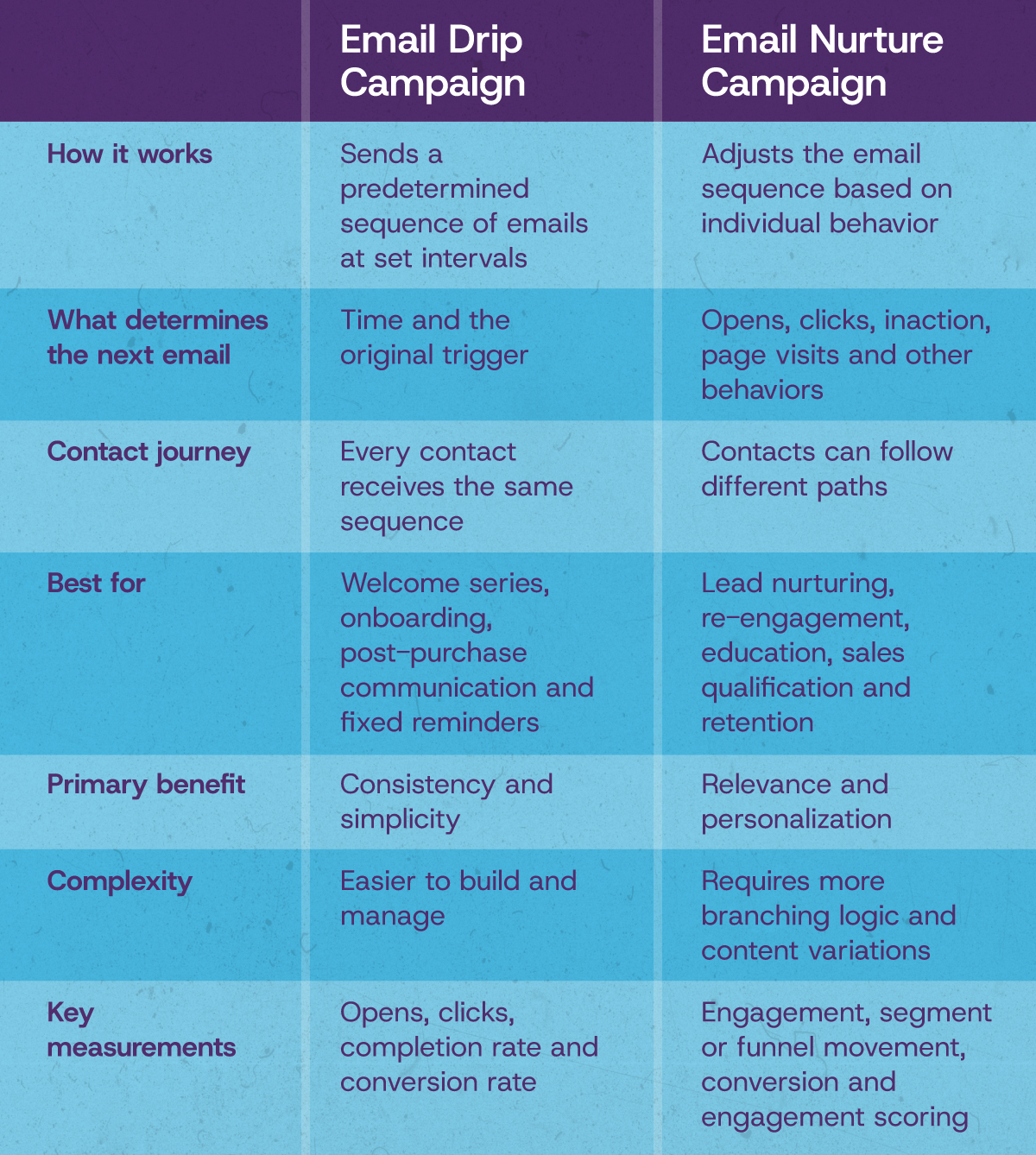
Both rely on automation and send emails without someone manually clicking send each time, but they’re built for different jobs. A drip campaign sends a defined sequence of emails on a schedule, regardless of whether or not the recipient engages with them. A nurture campaign adjusts based on behavior, sending different emails depending on how a contact engages along the way.
- What Is an Email Drip Campaign?
- What Is an Email Nurture Campaign?
- How to Set Up a Drip or Nurture Campaign
- How to Measure Success
- Drip and Nurture Campaigns vs. Newsletters
- Optimizing for Long-Term Success
- Let Alpha Charlie Handle the Automation
Drip Campaign vs. Nurture Campaign at a Glance
What Is an Email Drip Campaign?
An email drip campaign sends a predetermined sequence of messages at set intervals, triggered by a single action like a signup, purchase or download. Every contact who enters the sequence receives the same emails in the same order, on the same timeline, regardless of whether they open email one or ignore it entirely.
This structure makes drip email campaigns ideal for situations where the message doesn’t need to change based on behavior:
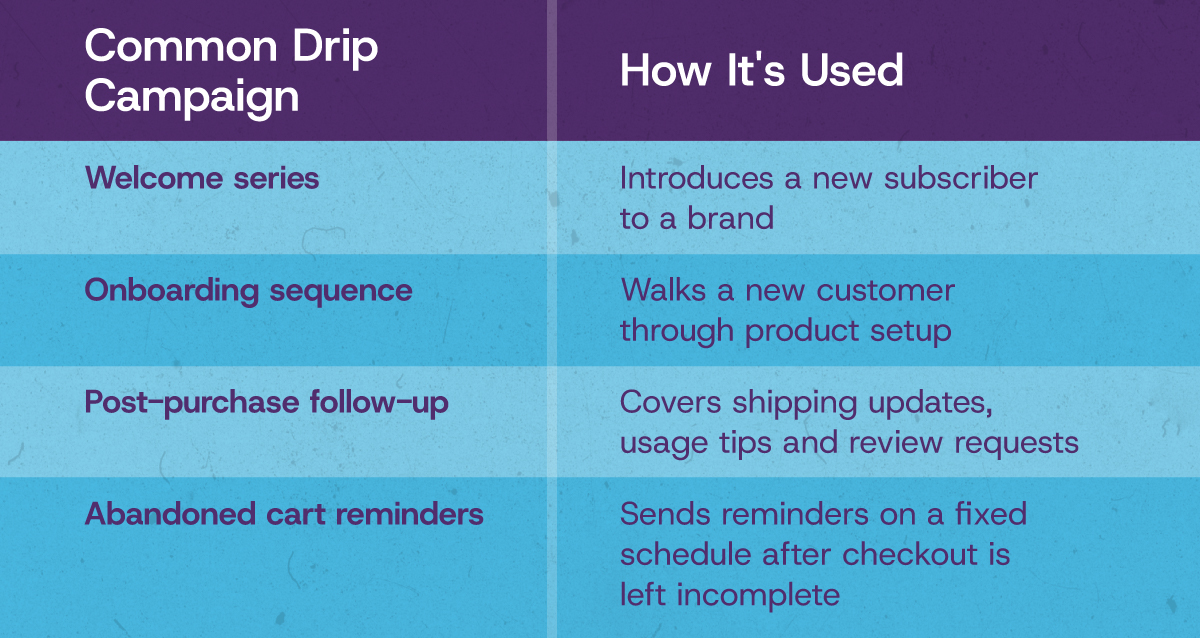
- Welcome series introducing a new subscriber to a brand
- Onboarding sequences walking a new customer through product setup
- Post-purchase follow-ups covering shipping updates, usage tips and review requests
- Abandoned cart reminders sent on a fixed schedule after checkout is left incomplete
The benefit of a drip email marketing approach is consistency. Once built, the sequence runs without ongoing manual input, delivering the same reliable experience to every contact who enters it. It’s also simpler to build and measure than a fully branching automation, which makes drip campaign marketing a smart starting point for teams new to marketing email automation.
To measure success, watch open rates and click-through rates at each stage of the sequence, along with completion rate (how many contacts make it through the full series) and conversion rate at the sequence’s intended goal, whether that’s a purchase, a form fill or a scheduled call.
What Is an Email Nurture Campaign?
An email nurture campaign also runs on automation, but instead of a fixed path, it adjusts based on what each contact does. Open an email but don’t click? You might get a follow-up with a different angle. Click through and view a pricing page? You might get moved into a more sales-focused track. This branching logic is what separates true email nurture from a basic drip sequence.
Nurture campaigns work best when the goal is building a relationship over time rather than pushing a single, immediate action:
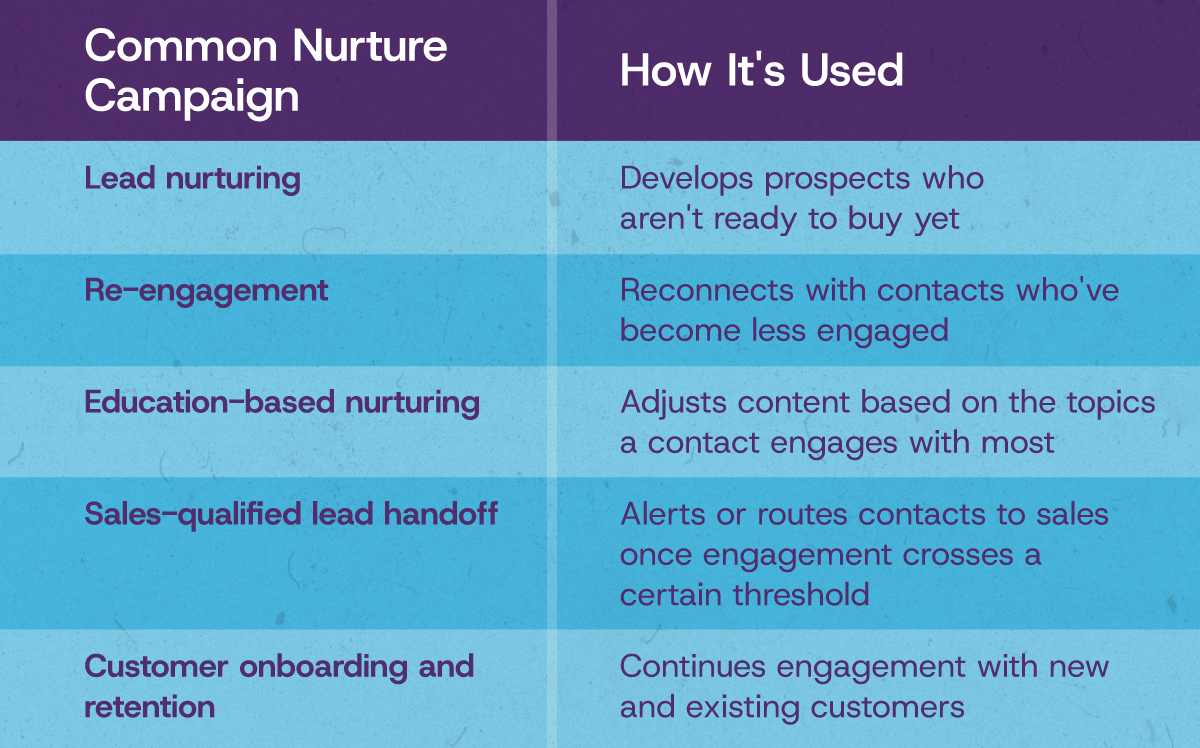
- Lead nurturing for prospects who aren’t ready to buy yet
- Re-engagement sequences for contacts who’ve become less engaged
- Education-based tracks that adjust based on which topics a contact engages with most
- Sales-qualified lead handoffs triggered once engagement crosses a certain threshold
- Onboarding new customers and customer retention
The benefit here is relevance. Because the content adapts to behavior, nurture campaigns tend to feel less like automation and more like a responsive conversation, which often improves engagement and trust over time.
Measuring nurture campaign success requires looking beyond simple open and click rates. Track engagement scoring, movement between segments or funnel stages, and ultimately how many nurtured contacts convert compared to contacts who received no nurture sequence at all.
When Should You Use a Drip Campaign vs. a Nurture Campaign?
The right approach comes down to how much the recipient’s behavior needs to influence what happens next.
Choose a drip campaign when everyone should receive essentially the same information in the same order. This works especially well for welcome messages, onboarding instructions, post-purchase communication and other predictable sequences.
Choose a nurture campaign when the next message should depend on what a contact does. Nurture automation is better suited to longer sales cycles, lead development, personalized education, re-engagement and situations where engagement can signal buying intent.
In some cases, you may use both. A contact could begin with a standard welcome drip campaign and later enter a behavior-based nurture campaign as they interact with additional content.
How to Set Up a Drip or Nurture Campaign
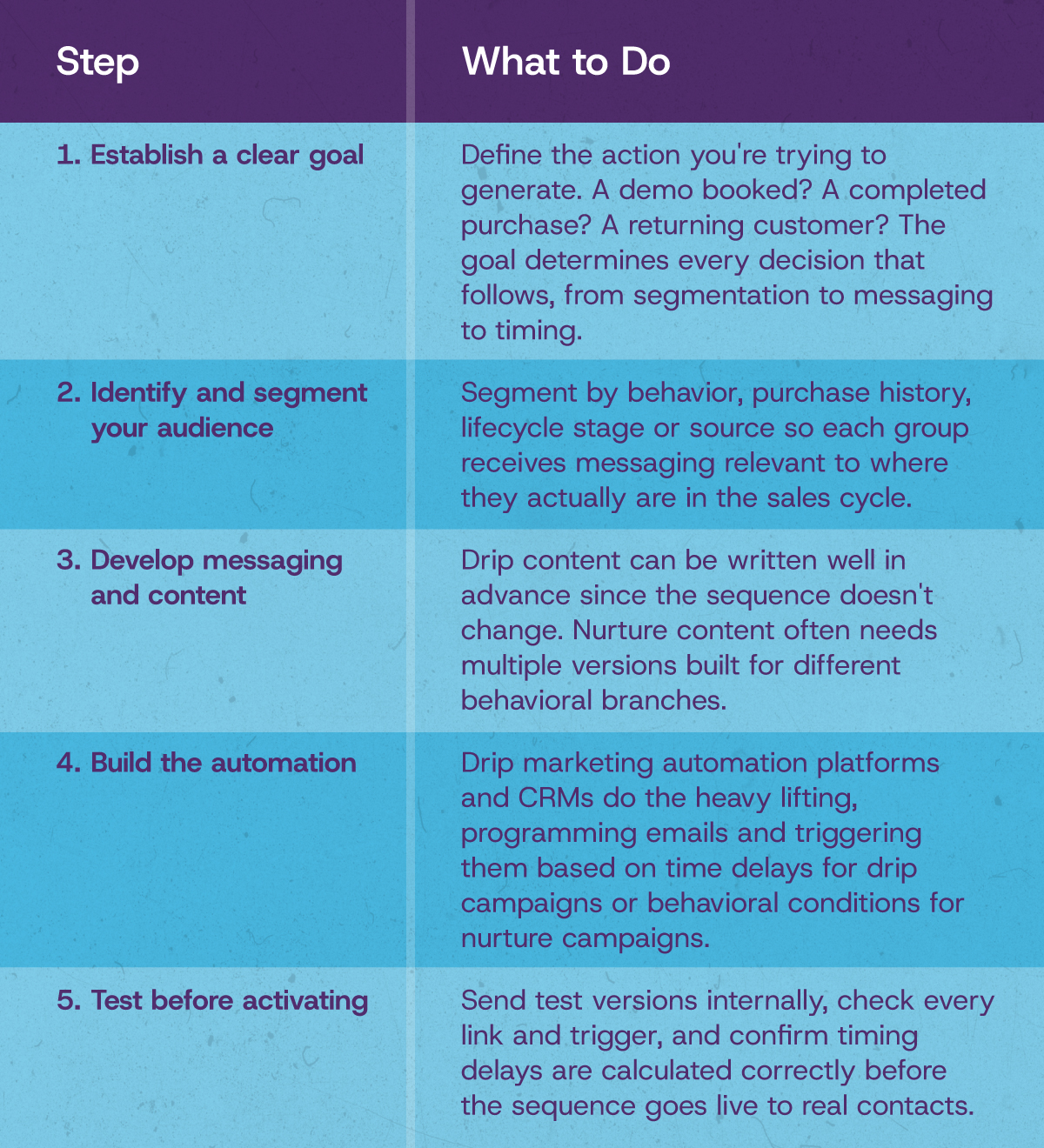
Assuming your CRM or email platform and contact lists are already in place, building either type of campaign generally follows the same five steps.
- Establish a clear goal. A demo booked? A completed purchase? A returning customer? The goal determines every decision that follows, from segmentation to messaging to timing.
- Identify and segment your audience. Segment by behavior, purchase history, lifecycle stage or source so each group receives messaging relevant to where they actually are in the sales cycle.
- Develop messaging and content. Drip content can be written well in advance since the sequence doesn’t change. Nurture content often needs multiple versions built for different behavioral branches.
- Build the automation. Drip marketing automation platforms and CRMs do the heavy lifting here, programming the emails and triggering them based on time delays (drip) or behavioral conditions (nurture).
- Test before activating. Send test versions internally, check every link and trigger, and confirm timing delays are calculated correctly before the sequence goes live to real contacts.
How to Measure Email Automation Success
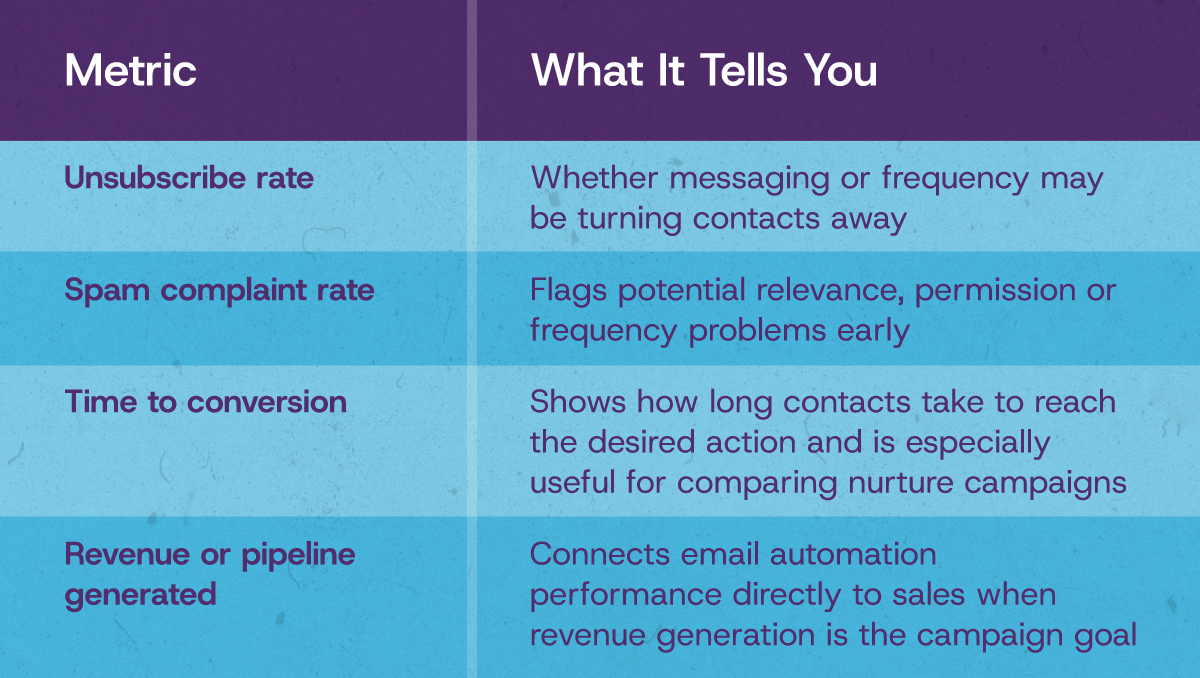
The right KPIs depend on the goal set in step one, but beyond the open, click-through and conversion rates already tracked at the individual campaign level, most drip and nurture campaigns should also watch:
- Unsubscribe and spam complaint rates, which flag messaging or frequency issues early
- Time to conversion, especially useful for comparing nurture campaigns against each other
- Revenue or pipeline generated, when the goal ties directly to sales
Following email marketing best practices means reviewing these numbers regularly, not just once after launch, since performance often shifts as audiences and content age.
How to Measure a Nurture Campaign
Measuring nurture campaign success requires looking beyond simple open and click rates. Track:
- Engagement scoring
- Movement between segments or funnel stages
- How many nurtured contacts ultimately convert
- How conversion compares with contacts who received no nurture sequence at all
How to Measure a Drip Campaign
Watch open rates and click-through rates at each stage of the sequence, along with:
- Completion rate: How many contacts make it through the full series?
- Conversion rate: How many complete the sequence’s intended goal, whether that’s a purchase, form fill or scheduled call?
Drip and Nurture Campaigns vs. Newsletters
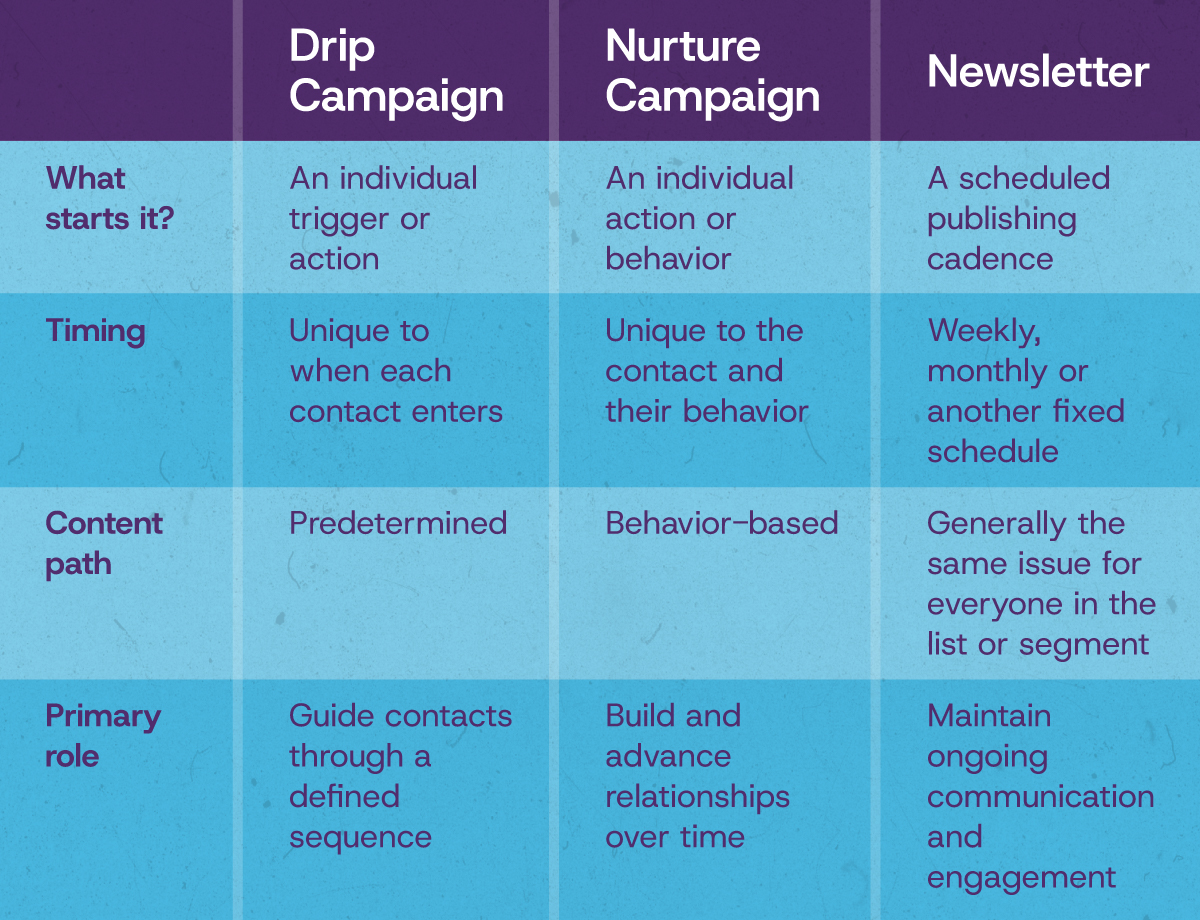
A newsletter is a recurring, scheduled email sent to an entire list or segment on a set cadence, weekly, monthly, and so on, regardless of when someone joined the list. Drip and nurture campaigns, by contrast, are triggered by an individual action or behavior and unfold on a timeline unique to each contact.
These aren’t competing tools. Many brands run automated drip campaigns for onboarding while also sending a regular newsletter for ongoing communication and engagement. A new subscriber might move through a welcome drip sequence during their first two weeks while also receiving the next scheduled newsletter issue in that same window. Used together, they cover both the immediate first impression and the long-term relationship.
Optimizing Email Automation for Long-Term Success
Automation in email marketing isn’t something you build once and forget. To keep performance strong over time:
- A/B test subject lines, send times and content within existing sequences
- Grow your audience continuously, since even the best sequence underperforms against a shrinking or stale list
- Refresh content periodically, especially in evergreen drip sequences that can start to feel dated
- Adjust timing and triggers based on real performance data rather than assumptions made when the sequence was first built
Treating drip email automation as a living system rather than a set-it-and-forget-it project is what separates high-performing campaigns from ones that quietly lose relevance.
Let Alpha Charlie Handle the Automation
Drip and nurture campaigns look straightforward on paper. Segmentation, branching logic, timing, content variations and platform settings can get complicated fast, especially once multiple sequences start running at the same time.
That’s where we come in.
Whether you’re still deciding between a drip campaign vs. nurture campaign or ready to build both, Alpha Charlie creates email marketing and automation strategies that fit your goals, your audience and your platform, so your campaigns work as hard as your team does.
Ready to put a real strategy behind your automation? Let’s talk.

