



Does Your Marketing Strategy Connect to Sales Results?
06.25.26 · Alpha Charlie
Top Takeaways
- Start with a business goal, not a deliverable. More activity without a clear objective is just motion.
- Today’s buyers do their homework long before they talk to sales. Every touchpoint shapes their impression of your brand before you ever enter the conversation.
- Marketing and sales need to work from the same data. When both teams share the same numbers the conversation shifts from defending activity to making better decisions.
Most companies aren’t short on marketing activity.
They have a website. They send emails. They post on social. They may be running ads, publishing content, building decks, updating collateral and tracking performance across more platforms than anyone really wants to log into.
Still, leadership eventually asks the question that matters most: Is this helping our business?
Marketing may be reporting website traffic, email engagement and campaign performance. Sales may be tracking calls, quotes, proposals and closed deals. Leadership may be focused on revenue, margin, retention or market share.
Each of those numbers can be useful. But when they’re not aligned, they can create more confusion than confidence.
Companies that get more from their marketing tend to be more disciplined about what they’re trying to influence, who they’re trying to reach and how marketing and sales are expected to work together.
Buyers Are Doing More Before They Talk to Sales
Today’s buyers rarely start from zero.
Before they contact your team, they’ve likely visited your website, reviewed your social presence, compared competitors, asked peers and used AI-powered search tools to narrow their thinking. By the time they raise their hand, they likely have a strong impression of who you are, what you know and whether you’re worth their time.
Every touchpoint now carries more weight.
A website, LinkedIn post or email may feel like a single piece of communication. To the buyer, each one adds to the larger picture. Together, they either build confidence or introduce doubt.
When the message on your website doesn’t match the sales conversation, trust weakens. Marketing may create interest but if sales follow-ups lack context, momentum slows. Your marketing efforts begin to look like a cost instead of a growth driver.
The Business Goal Has to Lead
A strong marketing strategy doesn’t start with a list of deliverables; it starts with a business goal.
A company trying to increase qualified leads needs a different marketing plan than one trying to enter a new market. Improving close rates requires a different approach than building awareness. Supporting a sales team isn’t the same as driving event attendance or strengthening position against a competitor.
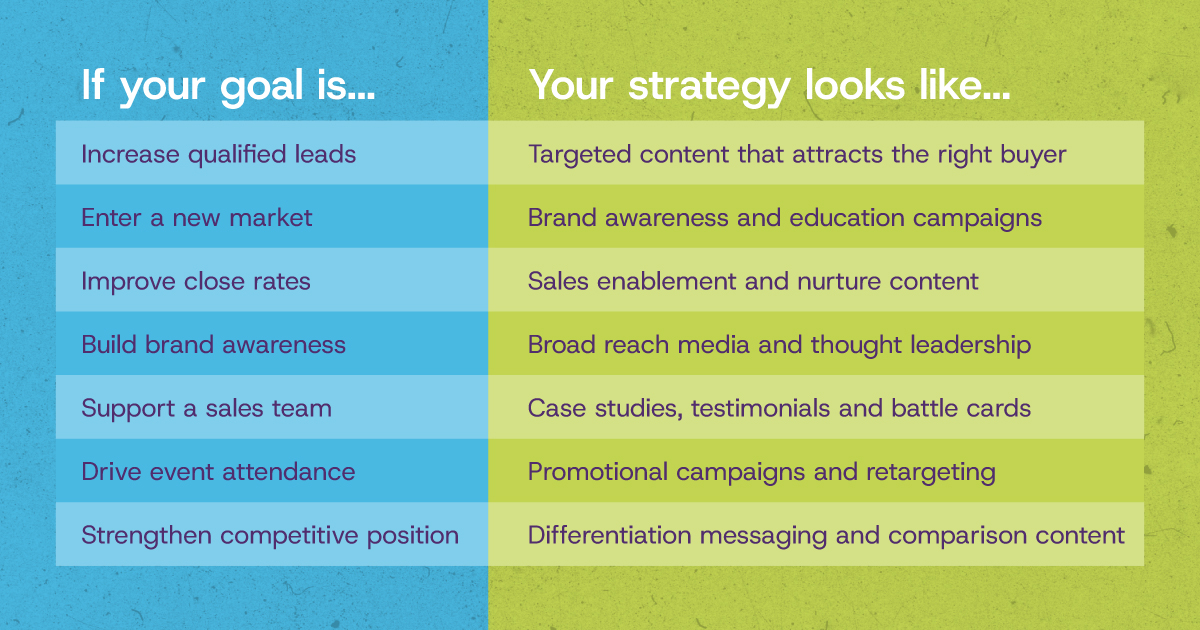
Many companies lose focus here. They prioritize marketing tactics and ask for more posts, more emails, more ads or more content before defining what those efforts need to accomplish.
More activity can create the feeling of progress, but motion and momentum are not the same thing.
Before investing in more marketing, companies need to understand what they’re trying to move. Awareness. Consideration. Confidence. Conversion. Retention. Each one requires different messaging, timing and measures of success.
Your marketing strategy gives the team a clear job to do and becomes more effective when it’s tied to the larger business picture. Are you ready to start moving forward? Reach out to our team.

